The Future of Nursing Will Depend on Smarter Healthcare Workflows
Nurses are at the centre of healthcare delivery. They coordinate care, administer medication, monitor patients, respond to emergencies, educate families, document clinical activity and support recovery across every shift.
Yet the future nursing workforce is facing a major challenge.
According to the World Health Organization’s 2025 nursing workforce update, the global nursing workforce increased from 27.9 million in 2018 to 29.8 million in 2023. This is positive progress. However, the same report warns that deep inequalities remain, and the global nursing shortage is still projected to reach 4.1 million nurses by 2030.
For healthcare leaders, this means one thing clearly: hiring alone will not solve the problem.
Hospitals and care providers must also redesign workflows so nurses can spend more time on clinical care and less time on repetitive, manual and logistics-heavy tasks.
This is where automation, AI-enabled robotics and healthcare systems integration become important.
At Omni-Health, our position is clear:
Automation does not replace nurses. It supports nurses by removing repetitive, manual and time-consuming tasks so clinical teams can focus on patient safety, patient care and human connection.
Why Nursing Demand Is Rising Across Asia-Pacific
Across Asia-Pacific, the future requirement for nurses will be shaped by five major forces:
-
- Ageing populations
- Rising chronic disease burden
- Higher patient expectations
- Bed capacity expansion
- Workforce migration, burnout and retention challenges
- Ageing populations
Singapore and Australia have stronger healthcare infrastructure, but they are still facing workforce pressure because demand is increasing faster than manpower capacity. Malaysia and the Philippines are facing more visible nursing shortage risks. Countries such as Vietnam, Myanmar, Nepal and Sri Lanka have emerging healthcare capacity needs, but public workforce data is less consistently available, making workforce planning more difficult.
This creates a regional need for smarter workforce productivity.
The question is no longer only, “How many more nurses do we need?”
The better question is:
How can healthcare systems protect nurses’ time, reduce unnecessary workload and improve safety at scale?
Country Comparison: Different Markets, Same Workforce Pressure
| Country / Market | Workforce Challenge | Future Requirement | Automation Opportunity |
| Singapore | Ageing population, hospital capacity expansion and continued recruitment needs | More efficient clinical workflows and reduced manual movement inside hospitals and aged care facilities | Closed-loop medication management, AMRs, hospital logistics automation, smart carts and telepresence robots |
| Malaysia | Nursing shortage risk projected to become more serious by 2030 | Improve productivity in hospitals and outpatient pharmacy settings | OPAS, i-Pharmabot, automated dispensing, ADCs, unit-dose packaging and workflow integration |
| Australia | Strong healthcare system, but projected nursing undersupply by 2035, especially in aged care and primary care | Support aged care, clinical teams and hospital operations with workflow automation | Cleaning robots, AMRs, service robots, medication carts and aged care robotics |
| Philippines | Large nursing workforce, but high migration pressure and local shortage risk | Improve nurse retention by reducing burnout and repetitive work | Medication safety automation, ADCs, pharmacy automation and hospital workflow digitisation |
| Vietnam | Growing healthcare demand and increasing pressure on clinical capacity | Build scalable hospital and pharmacy workflows | Pharmacy automation, medication packaging, dispensing systems and selected AMR deployments |
| Myanmar | Workforce and healthcare system pressure with limited consistent public data | Improve resilience and basic operational efficiency | Practical automation for logistics, pharmacy support and essential hospital operations |
| Nepal | Emerging need for stronger healthcare capacity and workforce distribution | Improve efficiency in hospitals and high-volume pharmacy environments | Unit-dose packaging, dispensing automation and workflow standardisation |
| Sri Lanka | Growing demand in private healthcare, pharmacy operations and hospital efficiency | Support pharmacists and nurses by reducing manual counting, labelling and coordination work | Outpatient pharmacy automation, automated tablet dispensing, medication carts and future-ready hospital logistics |
The maturity level may differ by country, but the direction is similar. Nurses need better systems around them.
What Will Future Nurses Require?
The future nurse will not only need clinical knowledge. Nurses will also need a healthcare environment that is digitally supported, safer and more efficient.
1. More Time for Bedside Care
Nurses should not be spending excessive time searching for medicine, moving supplies, waiting for stock, carrying items between departments or duplicating documentation.
The future requirement is simple:
More nurse time must return to direct patient care.
Automation can support this by handling routine movement, dispensing, tracking and documentation support.
2. Safer Medication Workflows
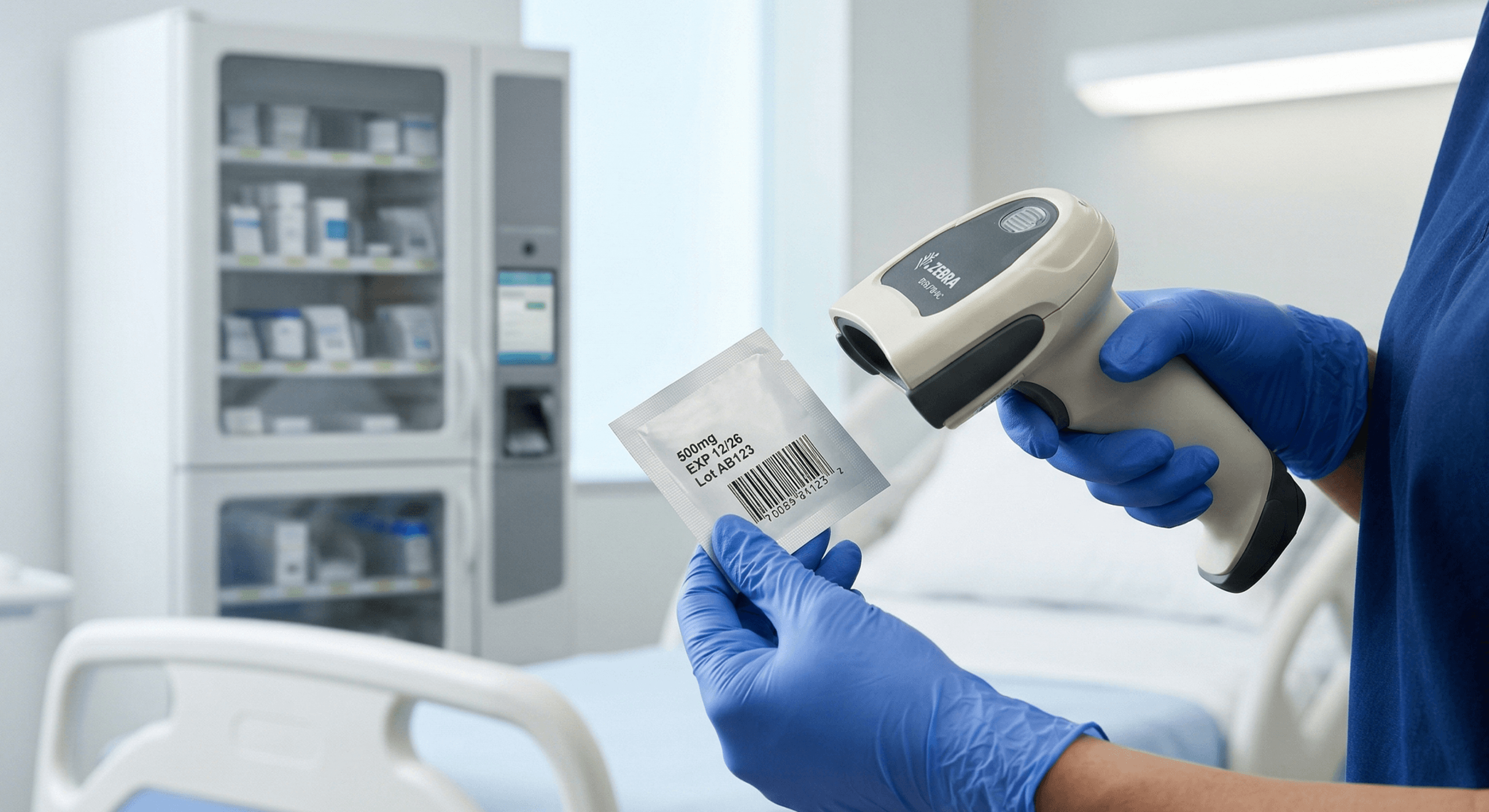
Medication administration is one of the most frequent and high-risk nursing responsibilities. Every medication round requires the right patient, right drug, right dose, right route and right time.
Manual workflows increase the risk of interruptions, missed checks, delays and documentation gaps.
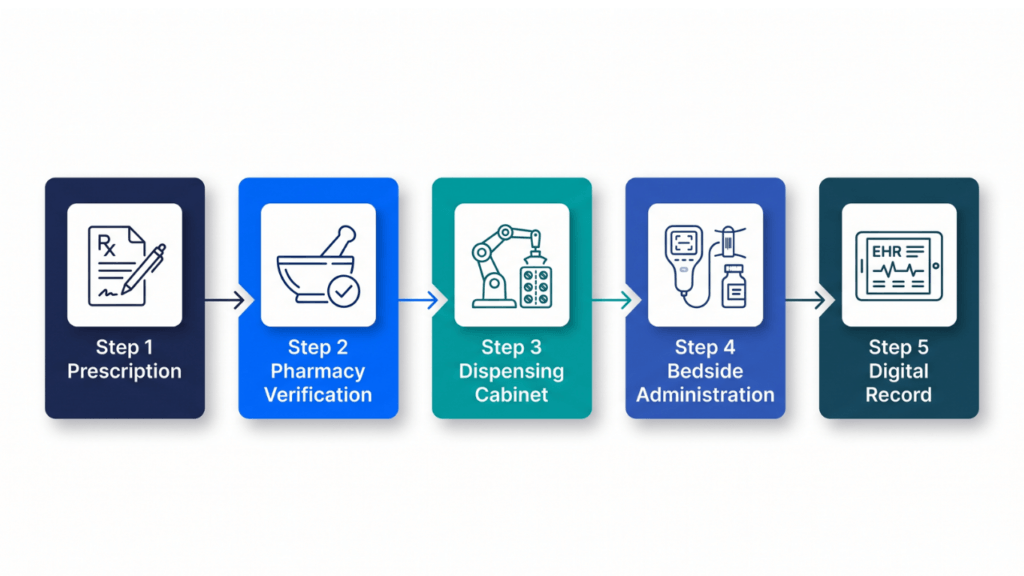
Omni-Health supports hospitals with closed-loop medication administration models that integrate:
-
- Hospital Information Systems
- Pharmacy verification
- Omnicell Automated Dispensing Cabinets
- Barcode Medication Administration
- Unit-dose packaging
- Omni-Kart bedside medication carts
- Real-time medication documentation
- Hospital Information Systems
This creates a safer digital chain from prescription to pharmacy, dispensing, transport, bedside verification and documentation.
For nurses, this means fewer manual checks, fewer unnecessary movements and better confidence during medication administration.
3. Reduced Logistics Burden
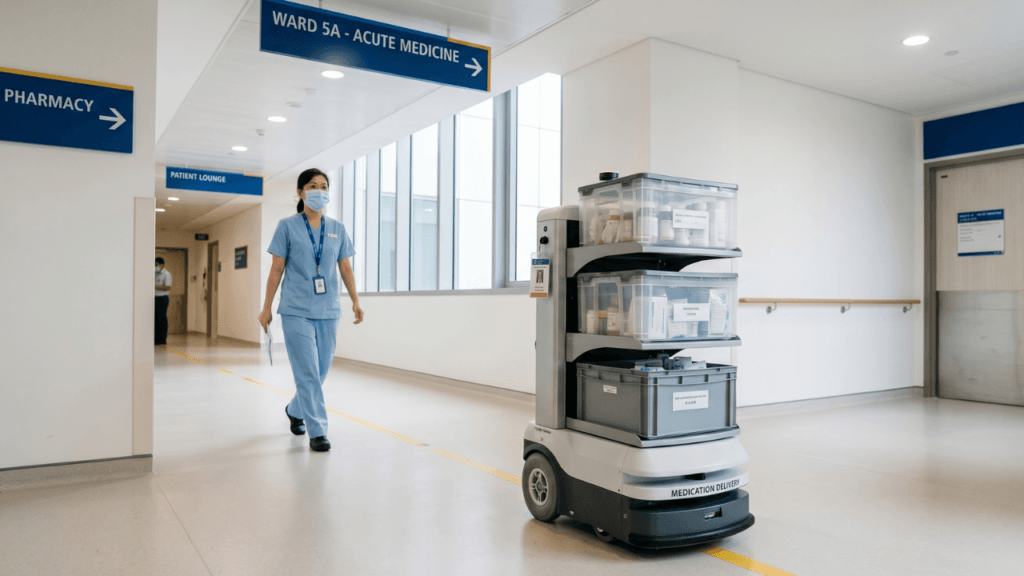
Nurses are clinicians, not couriers.
In many hospitals, nurses and support teams still spend valuable time moving medication, linen, meals, consumables, documents and equipment across wards and departments. In large hospitals, these movements become a hidden cost.
Autonomous Mobile Robots can support internal logistics by transporting:
-
- Medication
- Linen
- Meals
- Sterile supplies
- Consumables
- Waste and non-clinical items
- Documents and samples, depending on workflow design
- Medication
Omni-Health’s AMR integration approach includes workflow study, robot selection, lift integration, automated door integration, route planning, fleet monitoring, task scheduling and staff training.
This helps hospitals reduce manual transport workload while improving delivery consistency.
4. Better Support in Aged Care
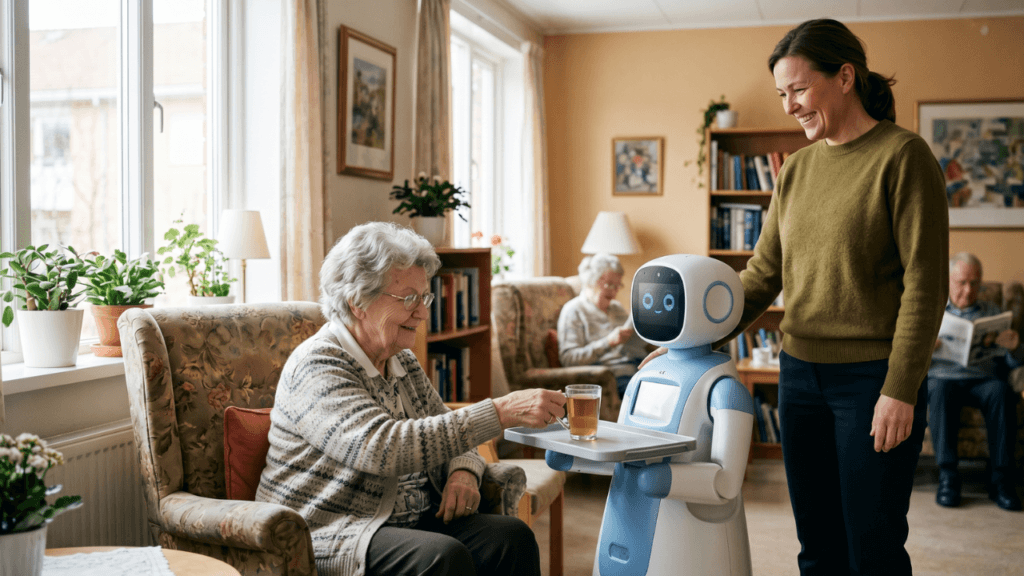
Australia, Singapore and several Asia-Pacific countries are seeing higher demand for aged care and long-term care services.
Aged care requires more than clinical support. It requires safe movement, regular deliveries, hygiene consistency, resident engagement, and efficient staff coordination.
Robotics can assist aged care operators through:
-
- Autonomous cleaning robots
- Service robots
- AMRs for linen and meal delivery
- Telepresence robots for remote communication
- Workflow monitoring and operational dashboards
- Autonomous cleaning robots
These technologies do not remove the need for caregivers. They help caregivers focus on residents instead of repetitive operational tasks.
5. AI-Supported Operational Visibility

AI in healthcare should be used responsibly. It should not be positioned as a replacement for clinical judgement.
However, AI-enabled workflow tools can support hospital leaders and nursing teams by improving visibility across operations.
In practical terms, AI and analytics can help with:
-
- Predictive inventory planning
- Pharmacy workload balancing
- Robot fleet optimisation
- Delivery route planning
- Maintenance alerts
- Bottleneck identification
- Usage trend analysis
- Operational decision-making
- Predictive inventory planning
For nursing teams, this means better coordination and fewer avoidable delays.
How Omni-Health Supports Nurses Through Automation Integration
Omni-Health is a healthcare automation and technology integration company with experience across hospitals, aged care facilities and pharmacies. Since 2008, Omni-Health has supported healthcare organizations across Asia-Pacific with automation, robotics and workflow integration.
Our purpose is to enhance patient care through operational efficiency.
The solutions most relevant to nursing workforce support include:
1. Omnicell Automated Dispensing Cabinets
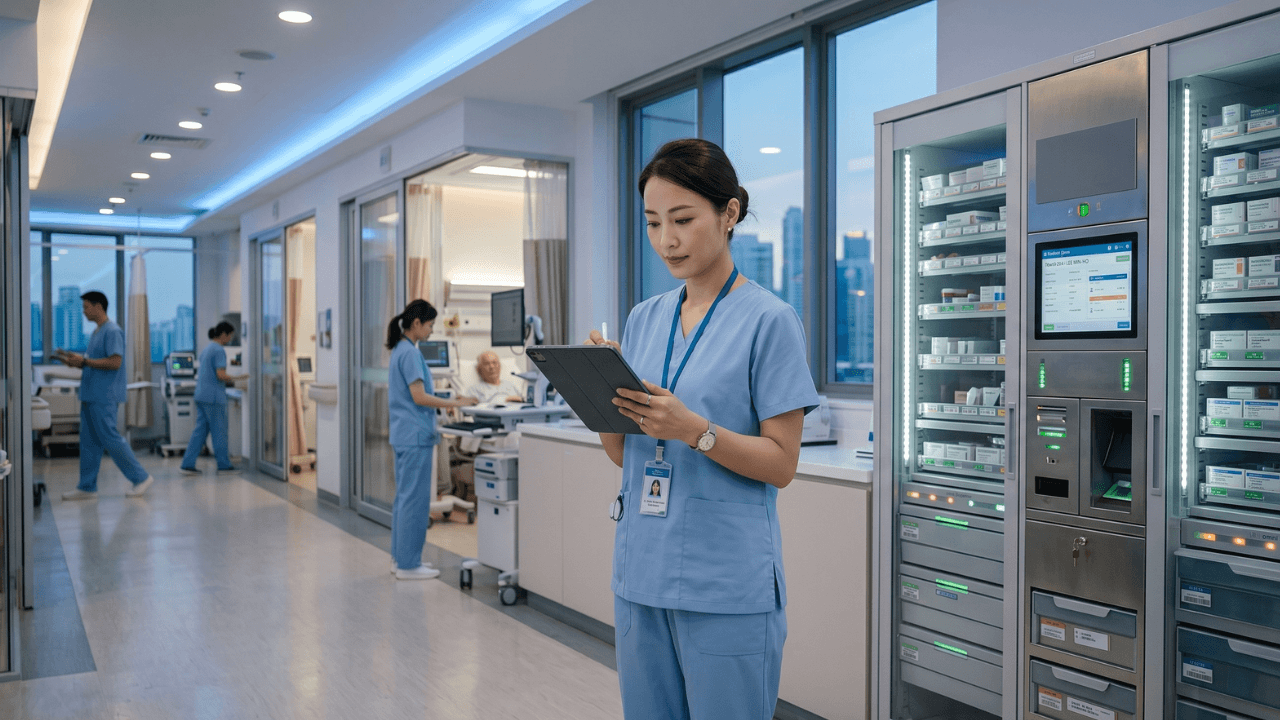
Omnicell Automated Dispensing Cabinets help hospitals improve medication availability, control and security at ward level.
For nursing teams, ADCs can support:
-
- Faster access to approved medication
- Controlled medication storage
- Reduced stock searching time
- Improved medication traceability
- Stronger audit control
- Safer medication workflow governance
- Faster access to approved medication
When integrated with hospital systems, ADCs become part of a stronger medication safety environment.
2. Omni-Kart Bedside Medication Workstations
Omni-Kart supports bedside medication administration by bringing the digital workflow closer to the patient.
It can support nurses with:
-
- Secure medication transport
- Bedside verification
- Reduced walking time
- Improved documentation flow
- Integration with medication dispensing workflows
- Better visibility during medication rounds
- Secure medication transport
This helps reduce friction between pharmacy, ward storage, and bedside administration.
3. Closed-Loop Medication Management
Closed-loop medication management connects prescribing, pharmacy verification, dispensing, bedside administration, and documentation.
The objective is to reduce preventable medication errors and support nurses with a safer medication pathway.
A closed-loop workflow may include:
-
- HIS integration
- Pharmacy automation
- Automated Dispensing Cabinets
- Barcode Medication Administration
- Unit-dose packaging
- Omni-Kart bedside carts
- Digital medication records
- HIS integration
This is one of the strongest areas where automation can directly support nurses and patient safety.
4. Outpatient Pharmacy Automation Systems
High-volume outpatient pharmacies place pressure on pharmacists, technicians, nurses, and front-line service teams. Manual counting, packing, labelling, and verification can create delays and increase the risk of errors.
Omni-Health supports Outpatient Pharmacy Automation Systems that automate and coordinate:
-
- Prescription filling
- Medication packaging
- Labelling
- Verification
- Inventory tracking
- Workflow monitoring
- Audit readiness
- Prescription filling
Malaysia’s i-Pharmabot at Institut Jantung Negara is a strong example of how pharmacy automation can improve dispensing efficiency and patient experience.
When pharmacy workflows improve, nurses also benefit because medication availability, accuracy and coordination become stronger.
5. Autonomous Mobile Robots for Hospital Logistics
Autonomous Mobile Robots can help hospitals reduce non-clinical movement and improve internal logistics consistency.
Omni-Health supports AMR deployments through:
-
- Workflow assessment
- Multi-brand robot selection
- Fleet management
- Lift and door integration
- Route optimisation
- Task scheduling
- Staff onboarding
- Lifecycle support
- Workflow assessment
AMRs are especially useful for hospitals, nursing homes and aged care facilities where repetitive movement consumes valuable manpower.
6. Telepresence and Service Robots
Telepresence robots such as temi can support healthcare environments by enabling:
-
- Remote consultations
- Virtual rounding
- Patient engagement
- Visitor guidance
- Family communication
- Wayfinding support
- Low-acuity communication tasks
- Remote consultations
This is particularly useful in aged care, rehabilitation, outpatient settings and large hospital environments.
7. Cleaning and Environmental Support Robots
Clean, safe and hygienic environments are essential to healthcare. However, cleaning and environmental support teams also face manpower pressure.
Autonomous cleaning robots can support:
-
- Floor cleaning
- Corridor cleaning
- High-traffic area maintenance
- Scheduled cleaning operations
- Consistent hygiene workflows
- Floor cleaning
While this is not a direct nursing task, better environmental support reduces the operational pressure around clinical teams.
Automation Is a Workforce Sustainability Strategy
The future of nursing will not be solved by technology alone. Healthcare systems still need investment in education, recruitment, fair working conditions, leadership development and mental health support for nurses.
However, automation can play a major role in workforce sustainability.
It can help hospitals:
-
- Reduce repetitive manual work
- Improve medication safety
- Strengthen workflow consistency
- Reduce avoidable delays
- Improve auditability
- Support better manpower allocation
- Improve patient experience
- Give nurses more time for clinical care
- Reduce repetitive manual work
In a world where nursing demand is rising, automation becomes more than a technology decision.
It becomes a patient safety decision.
It becomes a workforce protection decision.
It becomes a strategic healthcare leadership decision.
Omni-Health’s Vision for Nurse-Supportive Healthcare Automation

Omni-Health believes the next generation of healthcare will be built on integrated systems, not isolated devices.
Hospitals do not need technology that creates more complexity. They need automation that fits real workflows, supports clinical teams and improves operational outcomes.
Our role is to work with healthcare leaders to design, integrate and implement solutions that support nurses, pharmacists, caregivers and operational teams.
Across Singapore, Malaysia, Australia, the Philippines and other regional markets, Omni-Health continues to support healthcare institutions with automation, robotics, AI-enabled workflow technologies and smart medication management solutions.
The future of nursing is not about replacing human care.
It is about protecting it.
Frequently Asked Questions
Will robots replace nurses?
No. Robots and automation systems do not replace nurses. They support nurses by reducing repetitive, manual and logistics-heavy tasks so nurses can focus on patient care, safety and clinical decision-making.
Why is automation important for the future nursing workforce?
The nursing workforce is under pressure due to ageing populations, rising patient volumes, workforce shortages, burnout and migration. Automation helps improve productivity by reducing unnecessary manual work and improving workflow consistency.
What hospital tasks can be automated to support nurses?
Hospitals can automate medication dispensing, medication packaging, pharmacy workflows, internal logistics, linen movement, meal delivery, cleaning support, documentation support and selected communication workflows.
Which Omni-Health solutions support nurses most directly?
The most direct nurse-supporting solutions include Omnicell Automated Dispensing Cabinets, Omni-Kart medication workstations, closed-loop medication management, Barcode Medication Administration, unit-dose packaging, AMRs and telepresence robots.
How does pharmacy automation support nurses?
When pharmacy automation improves dispensing accuracy, labelling, packaging and medication availability, nurses receive medication more reliably and spend less time dealing with delays, missing stock or unclear medication information.
What is the best starting point for hospitals?
For many hospitals, the best starting point is a workflow study. From there, high-impact areas such as medication management, outpatient pharmacy automation and internal logistics can be prioritised.
Can automation be implemented in phases?
Yes. Hospitals can begin with one ward, one pharmacy workflow, one logistics route or one robot deployment. The solution can then be expanded gradually based on results, staff readiness and operational priorities.
Is AI safe for healthcare workflows?
AI should be used responsibly and within clearly defined operational limits. In healthcare automation, AI is most useful for workload balancing, inventory forecasting, route optimisation, predictive maintenance and workflow analytics. Clinical decisions must remain under qualified healthcare professionals.
Why should healthcare leaders act now?
The nursing workforce challenge is expected to continue toward 2030 and beyond. Hospitals that invest early in workflow automation will be better positioned to protect staff time, improve safety and maintain service quality as demand increases.
Suggested References for Website Editor
-
- World Health Organization – Nursing workforce grows, but inequities threaten global health goals, 12 May 2025
- World Health Organization – State of the World’s Nursing 2025 Report
- Singapore Ministry of Health – Annual hiring targets for healthcare workers to meet projected workforce size of 82,000 by 2030
- Australian Government Department of Health – Nursing Supply and Demand Study 2023–2035
- Channel NewsAsia – Nursing shortage in Malaysia to hit 60% by 2030
- Philippine News Agency – 28K Filipino nurses took first US licensure exam in 2024
- Omni-Health – Transforming Hospital Logistics with Intelligent Robotics & Integrated Automation
- Omni-Health – Closing the Loop on Inpatient Medication Safety
- Omni-Health – Outpatient Pharmacy Automation Systems
- Omni-Health – IJN Introduces i-Pharmabot to Improve Medication Dispensing with Automation
- World Health Organization – Nursing workforce grows, but inequities threaten global health goals, 12 May 2025
Source Disclaimer for Website Use:
This article refers to publicly available workforce data and industry sources for educational and thought leadership purposes. Reference to WHO or government data does not imply endorsement of Omni-Health, its products or its services by those organisations.