How Omni-Health Optimizes Workflow, Safety, and Patient Outcomes Through Intelligent Automation
As outpatient pharmacy volumes continue to increase, healthcare organizations face mounting pressure to improve workflow efficiency, patient safety, and medication accuracy — without overburdening pharmacy staff.
At Omni-Health, we design and integrate Outpatient Pharmacy Automation Systems (OPAS) that transform fragmented prescription filling processes into efficient, safe, and data-driven workflows, aligned with modern hospital operations across South-East Asia.
What Is an Outpatient Pharmacy Automation System (OPAS)?

An Outpatient Pharmacy Automation System (OPAS) is a technology-enabled solution that automates and coordinates core outpatient pharmacy operations, including:
- Prescription filling
- Medication packaging systems
- Labelling and verification
- Inventory management
- Workflow tracking and audit readiness
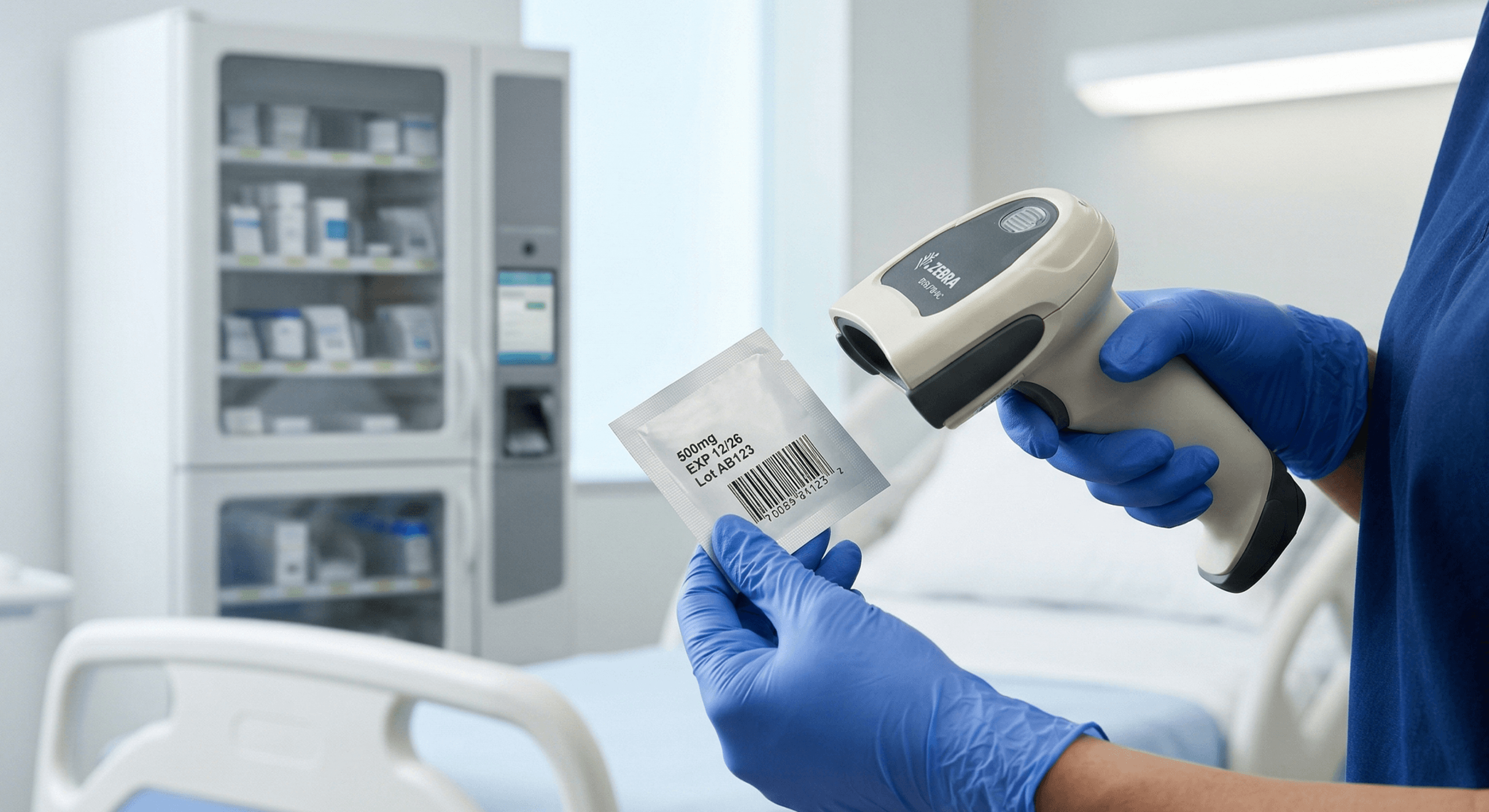
By combining robotics, barcode medication administration (BCMA), pharmacy information systems (PIS), and intelligent software, OPAS replaces manual, error-prone tasks with structured, repeatable, and traceable processes.
How OPAS Improves Pharmacy Workflow and Operational Efficiency
Traditional outpatient pharmacies rely heavily on manual handling, visual checks, and disconnected systems. This often leads to inefficiencies such as duplicated work, unnecessary staff movement, and delays in prescription filling.
OPAS directly improves workflow efficiency and productivity by:
- Automating up to 80% of prescription filling activities
- Reducing manual counting, packing, and labelling
- Streamlining inventory management through FIFO logic and real-time stock visibility
- Minimizing handovers between pharmacy staff and systems
- Enabling predictable, high-throughput medication dispensing during peak hours
These improvements allow pharmacy teams to operate with greater consistency, speed, and control, even as outpatient volumes grow.
Enhancing Patient Safety and Reducing Medication Errors

Medication errors remain a critical concern in outpatient settings, where high prescription volumes increase the risk of wrong drug, wrong strength, or incorrect labelling.
OPAS strengthens patient safety and drug safety by embedding multiple layers of verification, including:
- Barcode medication administration (BCMA) to confirm medication identity
- Automated cross-checks against prescription data
- Controlled medication packaging systems that prevent mix-ups
- Full traceability from prescription entry to patient handover
Clinical studies and large-scale implementations have shown that pharmacy automation can:
- Reduce medication errors and near-miss incidents by over 27%
- Improve consistency in prescription filling
- Enhance auditability and recall readiness
Integration with Clinical and Pharmacy Systems

A key strength of OPAS lies in its ability to integrate with existing hospital technologies.
Modern OPAS solutions are designed to work alongside:
- Computerized Physician Order Entry (CPOE) systems
- Pharmacy Information Systems (PIS)
- Hospital Information Systems (HIS)
- Electronic Medication Administration Records (eMAR)
Integration ensures that prescription data flows seamlessly from prescribing to dispensing, reducing transcription errors, and improving overall workflow continuity.
At Omni-Health, we ensure OPAS solutions are deployed as part of an integrated clinical ecosystem, not as isolated machines.
The Role of Artificial Intelligence and Machine Learning
Advanced OPAS platforms increasingly incorporate artificial intelligence (AI) and machine learning to further optimize pharmacy operations.
These technologies support:
- Intelligent workload balancing
- Predictive inventory management
- Identification of dispensing patterns and bottlenecks
- Continuous improvement of workflow efficiency
By analyzing dispensing data over time, AI-enabled systems help pharmacy leaders make better operational and staffing decisions, improving long-term productivity.
Impact on Pharmacy Staff and Patient Counselling

OPAS does not replace pharmacy professionals — it empowers them.
By automating repetitive and manual tasks, OPAS:
- Reduces physical and cognitive workload
- Lowers work-related stress
- Frees up time for patient counselling and clinical verification
- Supports safer, more focused patient interactions
This shift allows pharmacists and technicians to contribute more directly to clinical care and patient education, improving overall service quality.
ROI and Measurable Outcomes for Healthcare Leaders
From a leadership perspective, OPAS delivers measurable return on investment across multiple dimensions:
Operational ROI
- Increased productivity without increasing headcount
- Reduced rework caused by dispensing errors
- Optimized use of pharmacy space and resources
Safety & Quality ROI
- Lower medication error rates
- Improved patient safety metrics
- Stronger compliance with medication management guidelines
Strategic ROI
- Scalable capacity for future outpatient growth
- Improved patient satisfaction and institutional reputation
- Data-driven decision-making enabled by AI and analytics
The Omni-Health Advantage: Workflow-Driven System Integration
Successful OPAS implementation depends not only on technology, but on how well it fits real-world workflows.
Omni-Health acts as a healthcare systems integrator, providing:
- Workflow assessment and redesign
- Selection of appropriate automation technologies
- Integration with CPOE, PIS, and BCMA environments
- Regulatory and safety compliance support
- Local implementation, training, and lifecycle optimization
Our approach ensures OPAS delivers sustainable efficiency, safety, and value — not just automation.
Final Outcome: Better Care Through Better Pharmacy Operations
When implemented correctly, OPAS delivers meaningful outcomes for all stakeholders:
For Patients
- Shorter waiting times
- Higher confidence in medication accuracy
- Improved access to counselling and support
For Healthcare Professionals
- Reduced manual workload
- Safer, more structured workflows
- Greater focus on clinical responsibilities
For Healthcare Organizations
- Measurable efficiency gains
- Reduced medication errors
- Future-ready outpatient pharmacy operations
Ready to Optimize Your Outpatient Pharmacy?

Outpatient Pharmacy Automation Systems are no longer optional — they are becoming a core component of safe, efficient healthcare delivery.
At Omni-Health, we help healthcare organizations design, integrate, and implement OPAS solutions tailored to their workflows, volumes, and strategic goals.
👉 Contact Omni-Health for an OPAS consultation
🌐 www.omnihealth.com