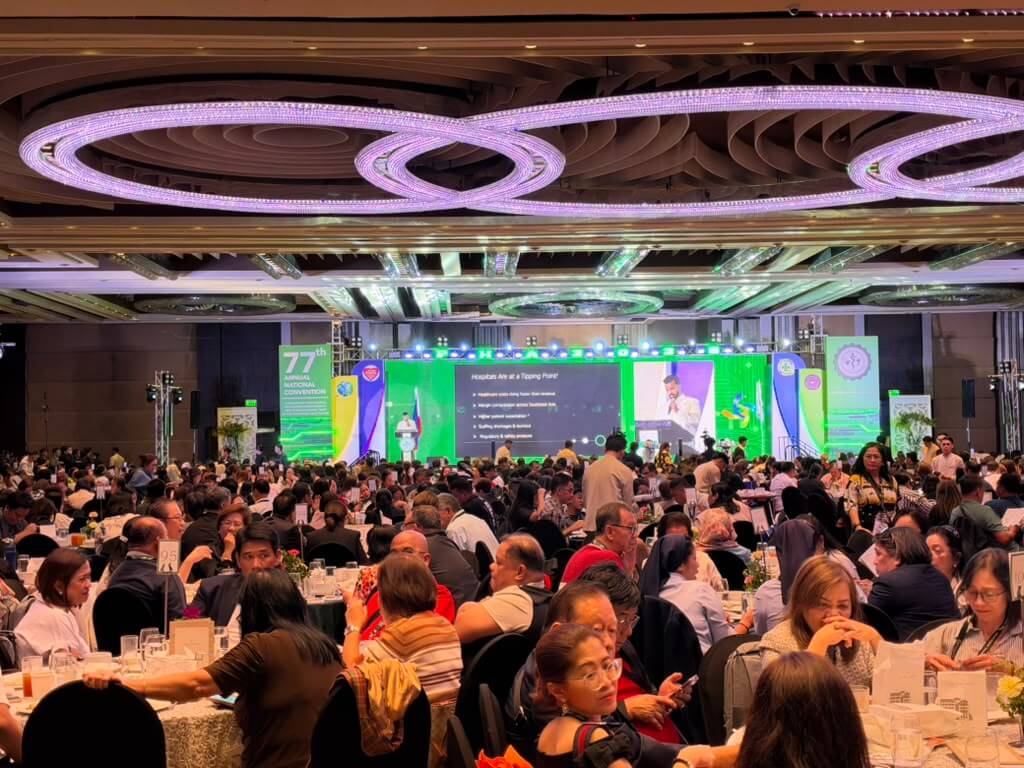
At the Philippine Hospital Association’s national convention in Manila, Omni-Health’s Managing Director asked hospital leaders to spend the next 90 days improving one workflow that matters to staff and patients.
A nurse is looking for medication during a busy shift. A pharmacist is trying to explain why the stock on the shelf differs from the stock in the system. A hospital executive is deciding where the next peso will make the greatest difference.
These were the people Niiru Baran asked his audience to think about at the Philippine Hospital Association’s 77th Annual National Convention and Exhibits. Speaking at The Manila Hotel on 24 November 2026, the Omni-Health Managing Director opened his featured presentation, Beyond Automation: Building Intelligent, Sustainable, and Trusted Hospitals of Tomorrow, with a question:
“What should become easier, safer, or more reliable for these people after we introduce technology?”
For hospital leaders in the Philippines weighing investments in automation, robotics and artificial intelligence, that question brings the discussion back to what happens on the ward, in the pharmacy and at the bedside. A system earns its place in a hospital when the people using it can point to a change that makes their work or the care they receive better.
Where does the working day get harder than it needs to be?
A nurse spends a few minutes looking for supplies. A pharmacist checks a discrepancy. Someone enters the same information again at a handover. Each interruption can feel small while it is happening. Across several wards and shifts, those minutes add up, and someone else may be waiting for the work to be done.
Baran encouraged leaders to follow one of those interruptions through the hospital. How often does it happen? Who has to stop what they are doing to resolve it? What does the delay mean for the next department or for the patient?
The answers help build a case for investment. One hospital may find that the pharmacy needs a better view of what is in stock and what is approaching expiry. Another may find that the biggest source of delay is a handover between the pharmacy and the wards. In both cases, knowing how the workflow performs today gives the hospital something concrete to measure after a change.
Follow the medication from prescription to bedside
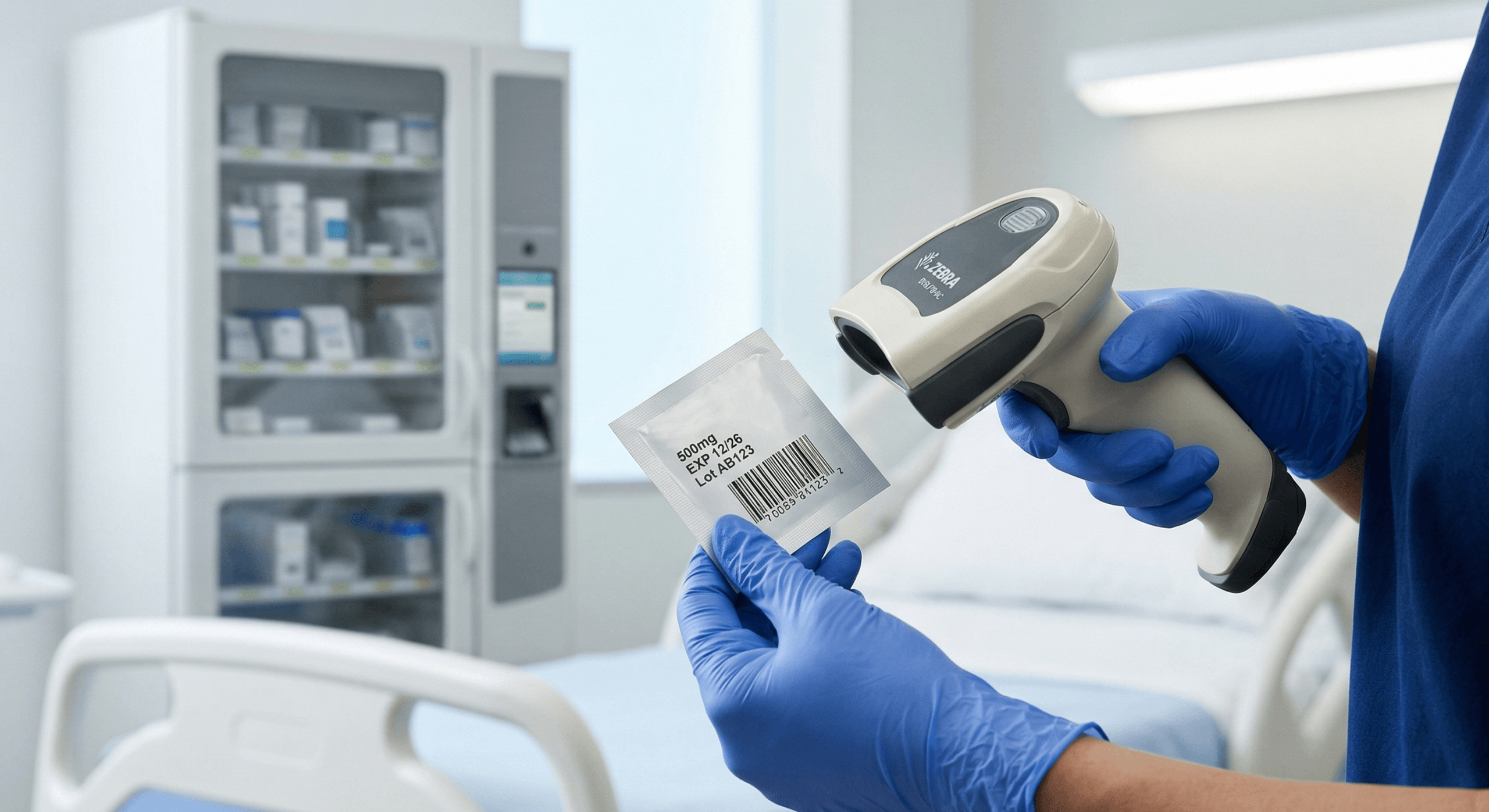
Medication management was one of the clearest examples of Baran’s presentation. A doctor prescribes, a pharmacist reviews; the medication is prepared and identified, and authorized staff retrieve it before verifying it at the bedside. Every handover relies on information from the previous step.
Closed-loop medication management connects those steps so teams can trace the medication journey from prescription to administration. It can support checks for the five rights of medication administration: the right patient, medication, dose, time and route.
For hospital teams, a useful test is to walk through both an ordinary shift and one where something goes wrong. What happens when a barcode is missing? Can the ward handle an urgent request during a network interruption? Who investigates when the medication record and the item in front of the nurse do not match?
These are the moments when a process has to work for the people who depend on it. Bringing pharmacy, nursing and IT into those conversations early helps the hospital decide how staff will verify information, handle exceptions and escalate when they need help.
Give robotics and AI a job the hospital can define
Baran brought the same questions to hospital robotics and artificial intelligence. A robot carrying small items between departments has a clear job. The hospital still needs to decide how it will use lifts and doors, who will receive the delivery, and what staff should do when a handover fails. Starting with one route lets the team see whether deliveries are reliable and how much staff time the service requires before deciding whether to expand it.
AI raises a similar question about ownership. If a system flags a pattern or generates an alert, who reviews it and decides what happens next? A hospital may have better visibility of its supplies, for example, but the team still needs to know who replenishes stock and who investigates an unexpected change in usage.
For patients and visitors, trust can come down to something even simpler. Someone using a concierge robot for directions should know how to reach a member of staff if they need help. The quality of that handover is part of the experience the hospital is designing.
Choose one workflow and give it 90 days
Baran closed with a practical invitation to hospital leaders. Choose one workflow that causes a recurring problem. Measure how it performs today, give it a named owner, and involve the people who use it on every shift. Test an improvement and review what changed within 90 days.
A pharmacy might measure the time its staff spend reconciling controlled medications. A ward might track how often nurses leave their work to find supplies. The numbers show whether the change is making a difference. A conversation with the people doing the work can explain why. Are handovers smoother? Are staff still relying on workarounds? What happens on the busiest shift?
Sustaining the improvement takes planning beyond those first 90 days. Hospitals need to be able to maintain the equipment, train new users, obtain support, and keep services running during disruptions. Leaders also need to decide what to do with the time automation gives back. For a nurse, it could mean a few more minutes to observe and reassure a patient. For a pharmacist, it could mean more time to review medication and support a clinical decision.
At Omni-Health, that is where our work with hospital teams across Asia-Pacific begins. We thank the Philippine Hospital Association for bringing this conversation to Manila. When a hospital invests in automation, one of the most telling questions it can ask its team afterwards is the one Baran posed in his presentation: “What has changed in your working day?”